
Symbiosis: noun, any interdependent or mutually beneficial relationship between two persons,groups, etc.
Our Story
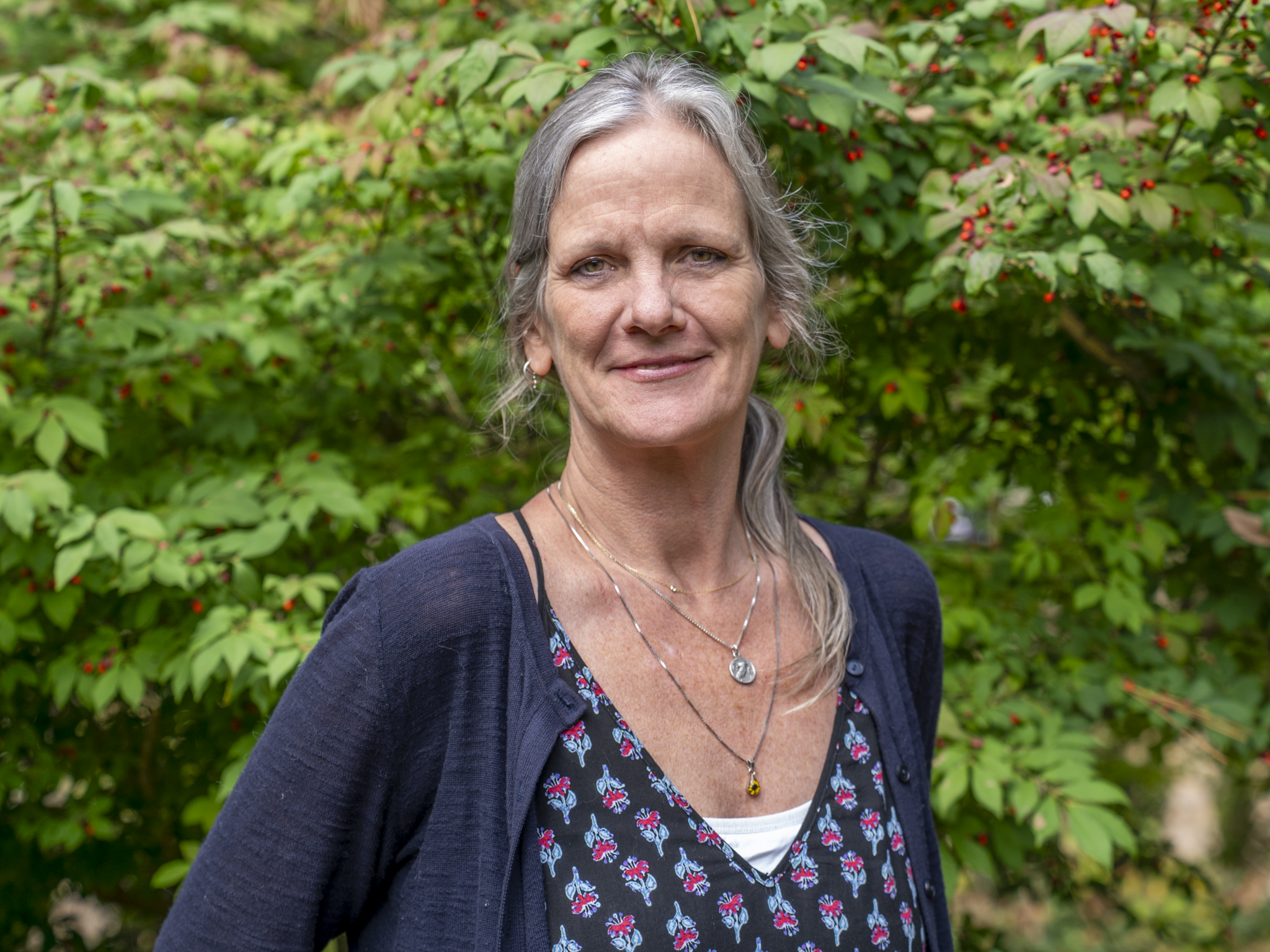
Kristine Fringer
FOUNDER & DIRECTOR
My vision for Symbiosis
It all began while working at Mount Ida College, supporting students who struggled to meet the academic and social demands of college. Many of these students came from traditional schools that emphasize standardized curriculum and assessments, and where their needs didn’t fit neatly into the conventional model. As a result, they were often misunderstood, under-supported, and moved along without the tools they truly needed to be successful in college and in life.
Working directly with these students, I witnessed what happens when learners are met with empathy, flexibility, and structure that honors how they learn best. Symbiosis was born out of these experiences and relationships. I knew that if I could create a learning environment where students could feel respected and empowered for who they are and how they learn, then they could grow up into more self-assured, confident, and happy people.
The name of the school came from the idea that we are built on relationship, reflection, and respect. We recognize that learning is not always linear, and that success looks different for everyone. In nature, “symbiosis” means mutual benefit. That name felt right. At our school, students and adults work in partnership, not opposition. We grow stronger when we understand one another—and we believe education should be a collaborative, adaptive process that honors the whole human being.
I was a dreamer when I started Symbiosis.
We live in a world where we’ve been taught - often without realizing it - that “real” education happens in a certain kind of building with certain kinds of schedules, with certain kinds of benchmarks and measurement tests and credentials. “Modern schooling” was created in order to produce a disciplined, literate workforce for factories and industrial society.
From a young age, most of us absorbed a very narrow idea of what school is and what it should look like. So when something outside that mold comes along - even when it may feel better, even when it works - it can feel risky.
We offer all of the state core curriculum requirements for academic achievement, just delivered in a different way. Students who graduate from Symbiosis receive a diploma, and we celebrate with a very traditional graduation ceremony. Students who wish to go to college are guided through the application and transition process. Our students graduate with us and are accepted at the colleges they apply to.
We value education in all its forms, inside and outside the classroom.
We’re not here to replace traditional school - we’re here to reimagine it and to offer families options. We understand that each family has its own value system and that each student has a different path and educational journey, and for some we are a stepping stone. Some families choose us as a temporary detour before returning to traditional school. We celebrate learning wherever it happens.
Because we are different
We don’t need to go through the process of accreditation, and that makes some families uneasy. The accreditation process often demands conformity to rigid structures, curricula, and assessment methods that don’t align with our commitment to personalized, flexible, and relationship-based learning. Pursuing accreditation would require significant financial and administrative resources that we prefer to dedicate directly to supporting our students. We go through a much simpler and easier process by getting approval directly from the school district by submitting education plans and detailed academic progress reports. Students are officially recognized by the state. This is the same process for homeschoolers. Our model is intentionally different. We believe that true education - especially for complex learners - can’t be measured by a checklist of standardized criteria designed for large, conventional institutions. Here’s the truth: accreditation doesn’t guarantee a child will be understood, supported, or inspired. It doesn’t measure joy, confidence, healing, or a return to learning. What we offer at Symbiosis is real growth - without needing to ask permission first.
Even when something is clearly working, it’s hard to unlearn what we’ve been told makes education legitimate. We understand that fear. It’s not unfounded. It’s just inherited from a system that has long equated structure with safety, and standardization with success.
But what if legitimacy isn’t about being conventional - what if it’s about being effective, thoughtful, and deeply aligned with what some young people actually need?
What we do at Symbiosis may not follow the traditional script - but it is thoughtful, intentional, and grounded in years of experience with students who didn’t thrive elsewhere. Our model works because it’s built for them. And we believe that’s more than legitimate - that’s necessary.